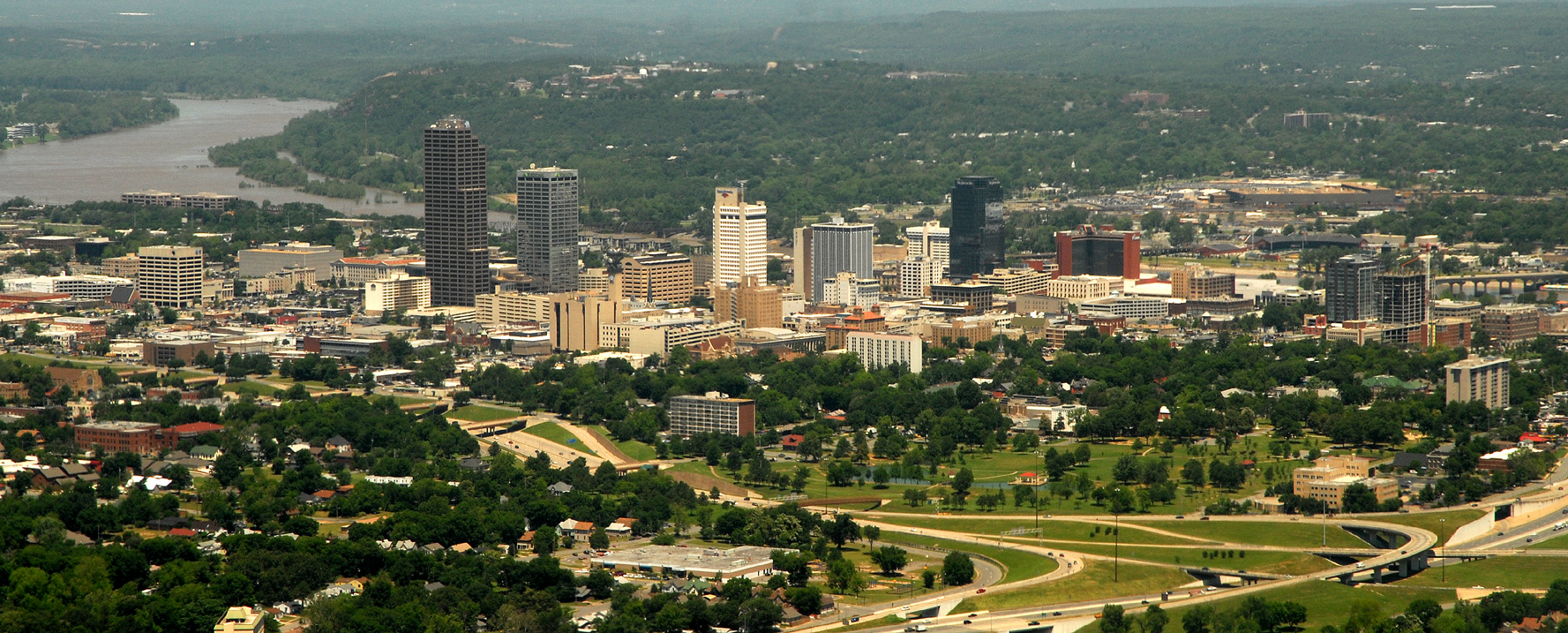
Hello from Little Rock! I am working here for the Southwest Power Pool (SPP) as a summer contractor in the transmission planning and research department. SPP is a regional transmission organization (RTO) and fulfills three primary roles: reliably operating the electric grid, administering the day-ahead and real-time electricity markets, and long-term infrastructure planning, including developing transmission expansion plans, connecting generators/loads to the electric grid, and ensuring non-discriminatory access to the electric grid for all SPP members.
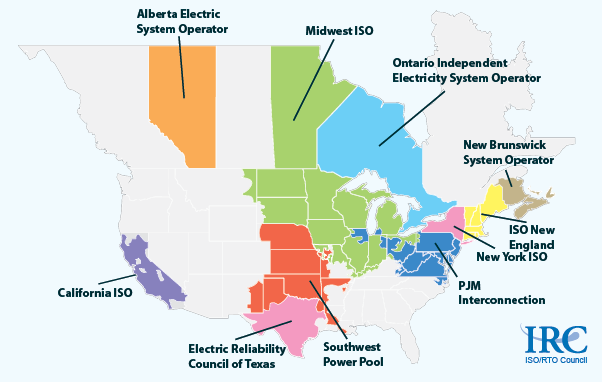
Published By: U.S. Energy Information Administration
This is my first time living in the South and second time in Arkansas. I visited Russellville, Arkansas last year to see the total solar eclipse on the Arkansas Tech campus (blog post here). The drive along I-40 through the Ozarks is beautiful, with soft, rolling, deeply forested mountains. These are not the jagged peaks of the West, and they are not as tall as the Appalachians, but they are beautiful and I’m looking forward to exploring more of the state during my summer here. Also – after a year in Ames, even relatively small peaks appear absolutely massive. The street my summer studio is adjacent to has more elevation change than the entire city of Ames!
Under the Köppen climate classification, Arkansas has a “humid subtropical climate,” with long, hot summers and cool-to-mild winters. The south is known for its unrelenting summertime heat and humidity as southerly winds off the Gulf of Mexico transport moisture northward. Monthly averages for July and August are above 90 degrees for highs and above 70 degrees for lows. Dewpoints are generally on either side of 70 degrees – slightly higher during the day and slightly lower at night. Yuck!
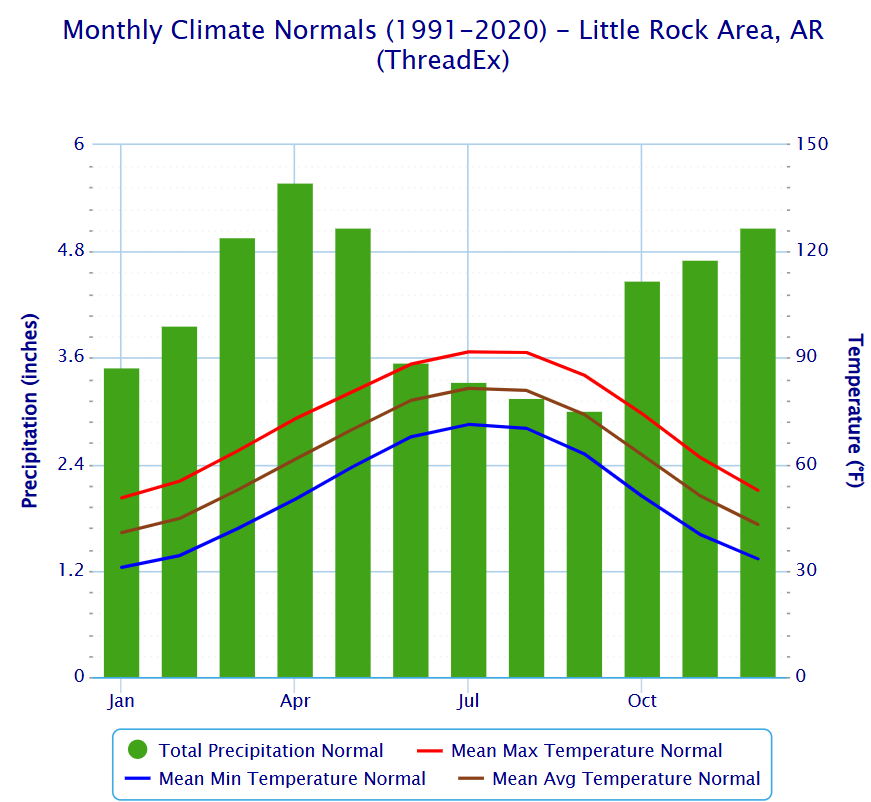
Unlike Ames, which averages less than 1.5 inches during each of December, January, and February, Little Rock’s precipitation is much more evenly spaced throughout the year. Much of this precipitation is associated with thunder and lightning, with 50-60 days each year featuring thunderstorms on average. Spring features the highest frequency of and most intense thunderstorms, with the greatest threat of tornadoes, hail, and high wind. Thunderstorm frequency declines somewhat during the summer but storms are still quite frequent, with June, July, and August averaging between 5-7 storms each. Thunderstorm severity, however, declines more significantly, as the storms are primarily driven by diurnal heating and not along/ahead of frontal systems with favorable wind shear profiles for supercell thunderstorms. Thunderstorm frequency declines further in the autumn and bottoms in the winter. However, storm severity rises as frontal systems return to the southern U.S. and provide more favorable wind shear profiles. After spring, there is a “secondary peak” in severe weather/tornadoes in November as these storms tap into subtropical moisture over the Gulf of Mexico, which is still quite warm in mid-autumn.
The below graphics show the Mid-South vs Plains tornado counts by month. Note how the Plains have a very pronounced single peak in the mid/late spring, while the Mid South has a slightly earlier spring peak, a secondary autumn peak, and occasional tornadoes throughout the winter, with very few tornadoes in the summer. This occurs despite the summer having the second-highest frequency of thunderstorms.
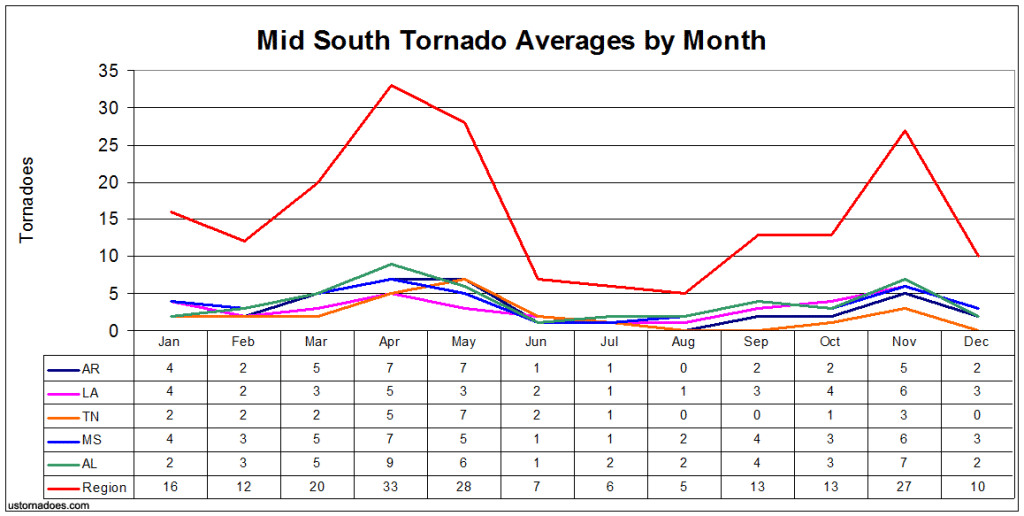

Due to its proximity to the Gulf of Mexico but the absence of any major barriers between it and the Arctic, Little Rock experiences a wide range array of severe event types. Tornadoes, ice storms, derechos, hailstorms, snowstorms, heat waves, arctic blasts, floods, and extended droughts have all impacted Arkansas and Little Rock. I briefly visited SPP at the beginning of April for a ‘kickoff meeting’ for our DOE project, and Arkansas had multiple tornadoes and major flooding. I’m hoping we see some exciting t-storms, but no severe events, this summer.
And maybe it’s just wishful thinking, but a day or two of moderate temps would be nice. (: