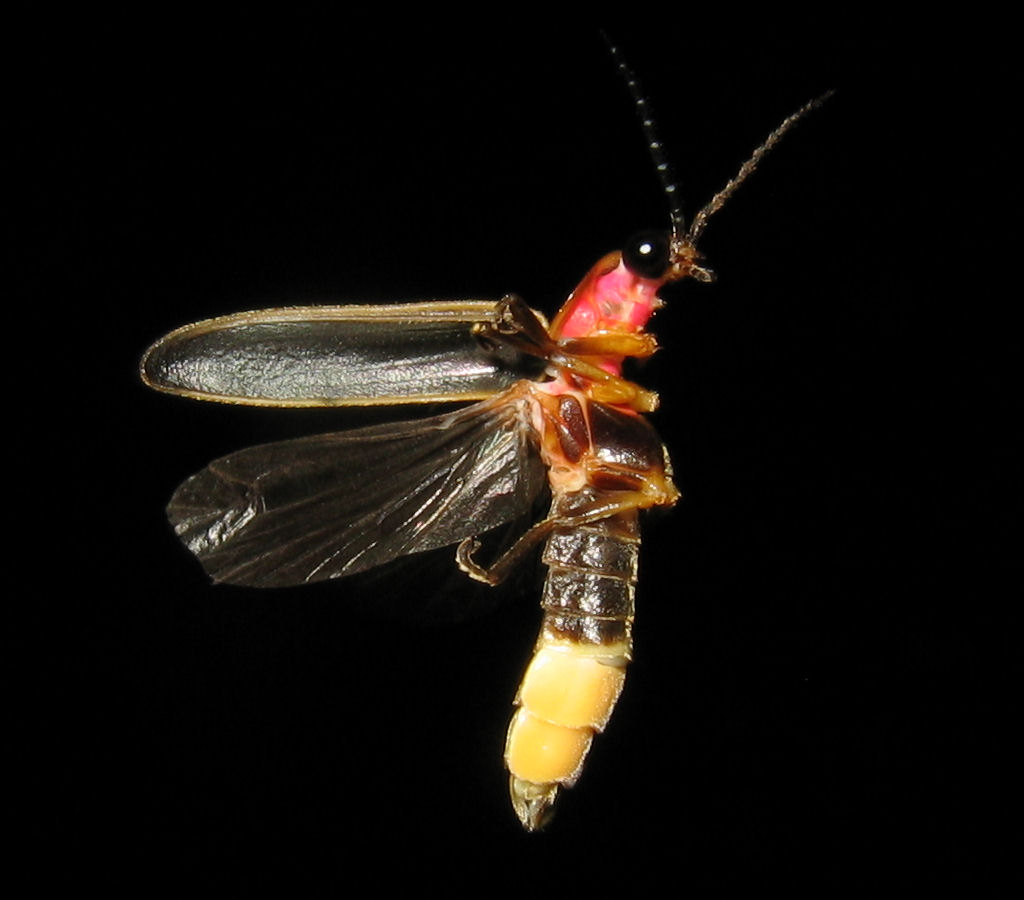
I just got back from a quick evening run near the Hillcrest Water Tower this evening. As I descended from the top of the hill and ran through the forest below, I was treated to a dazzling display of fireflies. I had already seen quite a few here around my neighborhood at dusk, but seeing them in the forest, with no other lights around, was a beautiful experience.
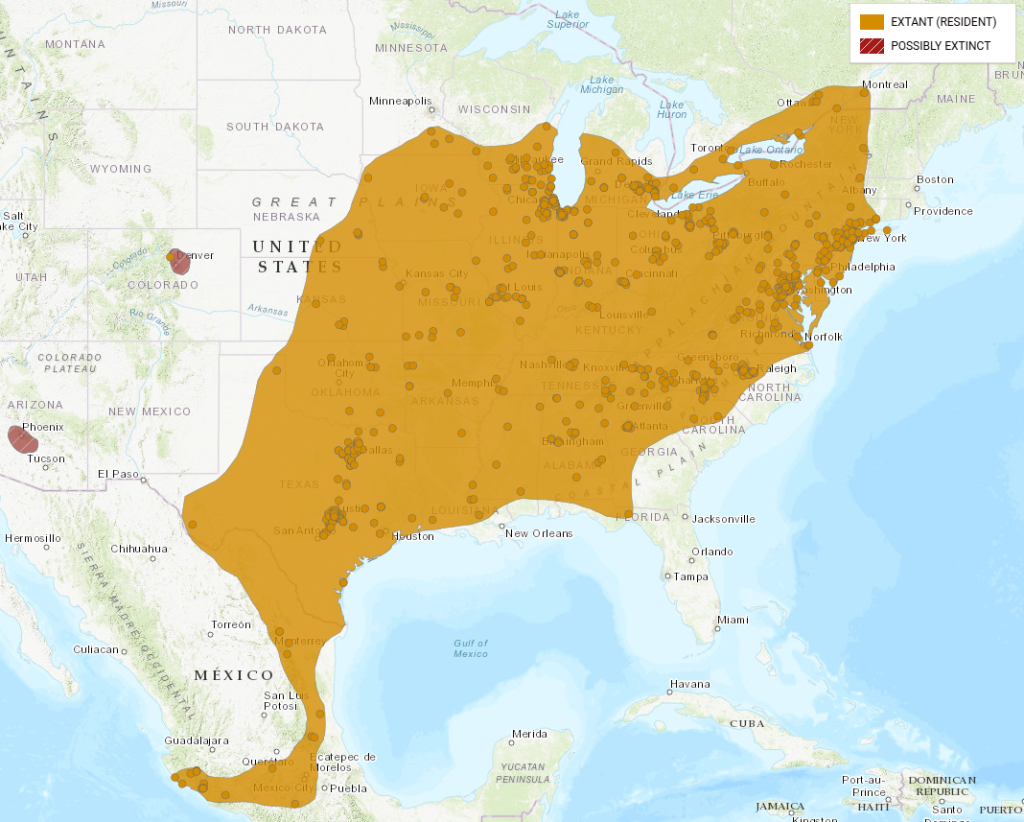
The most common firefly in the United States is Photinus pyralis, also known as the “Common Eastern Firefly.” It is also called the “Big Dipper Firefly” due to its characteristic, J-shaped flight path, where it lights at the top of the path. As the map below shows, it is found over the Central/Eastern US south to Central Mexico.
The light is created through a chemical reaction involving luciferin, luciferase, oxygen, and adenosine triphosphate (ATP). Luciferase are a class of enzymes that take luciferin (a molecule) and oxidize it using the energy from ATP. This process emits light, which the fireflies use to attract mates or (less commonly) ward off predators. Both sexes emit light, but the males are the ones flying around flashing light, while the females sit on some vegetation or structure and emit light to respond back to the males.
These light displays are not subtle! It’s amazing how far away you can see the flashes… I’ve seen them over 100 feet away, even just at dusk. The below video captures these lights well.
Fireflies spend 1-2 years as larvae, living in soil or leaf piles. They spend 1-3 weeks as pupa during their transition phase from larvae to adult. When temperatures warm, they hatch and live as adults for several weeks. Fireflies only exist as adults during the summer months, and the peak season is earlier further south (May-June) and later further north (July-August). Despite their name, they are taxonomically beetles, not flies.
Iowa sees beautiful firefly displays as well – I’ve seen them around the cornfields at dusk. For my friends in Seattle and Portland, be sure to keep an eye out for them if you ever head to the Central/Eastern U.S. during the summer.