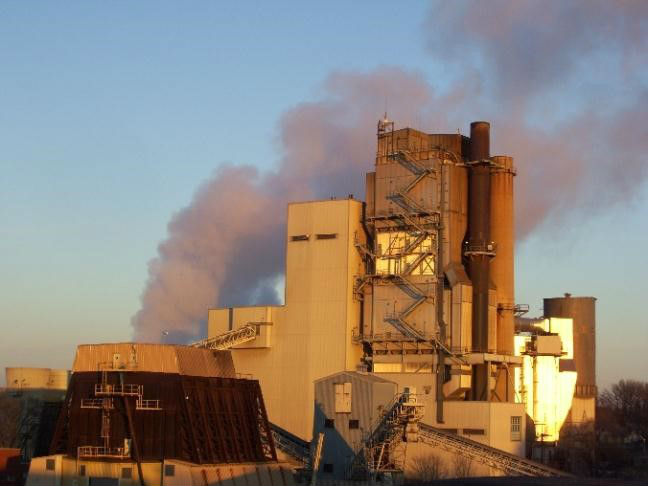
Today, Ames Electric Services issued a “peak alert,” asking customers to reduce their electricity usage from 3-7pm in response to a strong heatwave over the Midwest. This is similar to what Portland General Electric did during a heat wave this past July, and what California ISO did during early September 2022. Many customers got text messages alerting them of the reduced usage request, and it was posted all over social media.
The heat is pushing electricity demand to new highs, & we’re at risk of a record. By cutting back on power use until 7 p.m., you can:
— City of Ames (@cityofames) August 26, 2024
Save on utility bill. Support lower electric rates over time. Help prevent the need for more power plants
Simple steps make a big difference. pic.twitter.com/22saczCOLP
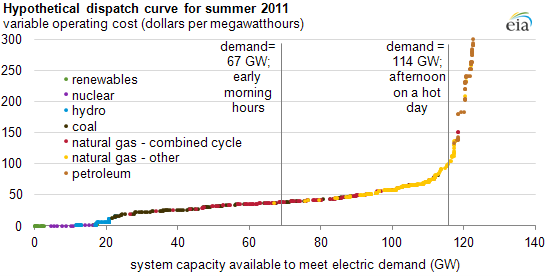
In their official press release, the City of Ames mentioned that a peak alert will help customers “lower utility bills, contribute to a lower electric rate over time, and avoid the need to build additional generation.” I’d add that reducing your usage during these peak times also has an outsized impact on reducing carbon emissions, as high demands require expensive and dirty “peaking plants” to fire up. The graphic below from the Energy Information Administration (EIA) shows a feature known as the “generation stack,” which shows the relationship between the total capacity of different units within a certain RTO or ISO and the cost of operating each unit. As you’d expect, units are dispatched from least to most expensive to meet load, and the most expensive units are either natural gas peaking plants or diesel/oil plants – both of which are inefficient and dirty.
When I worked as an energy trader at Puget Sound Energy, one of the things I learned was how much carbon emissions were impacted by load shapes. During the evening when demand is low, utilities often run their large, baseload natural gas and coal plants in a “minimum generation” configuration to serve demand, but they don’t turn off the plant entirely because it is expensive to “cycle” the plants on and off and exposes them to more wear and tear. Likewise, during the peak energy demand times in the morning and evening, utilities fire up smaller, fast-start natural gas peaking plants to serve load. If there was some way to “smooth out” the demand, with higher demand overnight & in the middle of the day, and lower demand during the peak hours, customers could save on their utility bills, plants could save on wear and tear, and carbon emissions would be reduced.
The “peak alert” days show this same load/price pattern, taken to an extreme. Conditions aren’t too bad for most of the day, but the peak hours (especially during hot, summer evenings when solar generation is low, temperatures are high, and people are returning home from work to start up their AC or charge their EV) can be absolutely brutal, with prices skyrocketing to price caps and every last plant dispatched to meet load. When I worked as an energy trader, these were the “exciting days” on the desk. The phone lines were always active with people wanting to purchase or sell power from us, and we did plenty of calling ourselves, making sure we had enough energy to keep the lights on. I traded the evening peak of September 6, 2022 when CAISO hit its all-time record load of 52,061 megawatts, and it was a pretty wild experience.
Despite record-breaking temps this summer, the California ISO has not issued any Flex Alerts since that multi-day heatwave in September 2022. Additionally, just last Tuesday, ERCOT (Texas) set a new all-time load record, and they made it through without needing to issue any peak alert. Both Texas and California have experienced an explosion of short-duration battery storage in recent years and this has helped them better prepare for these evening peaks. California’s storage increased from 500 megawatts in 2018 to over 10,300 megawatts today, and ERCOT began 2024 with 5.1 GW in battery storage and is now at 8GW. ERCOT expects another 3GW of batteries to come online before the year is through.
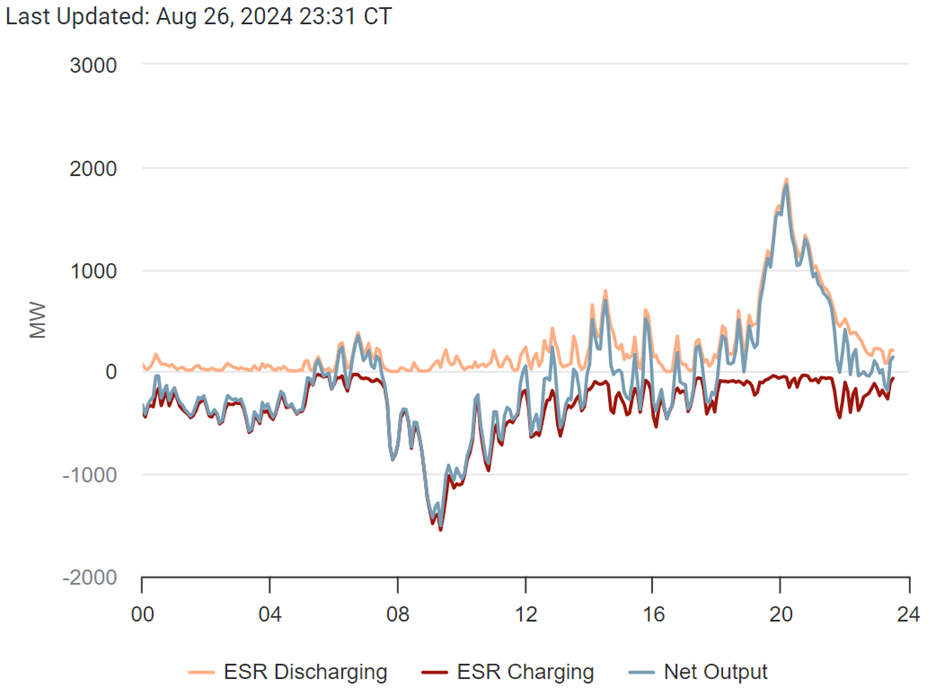
Credit: Electric Reliability Council of Texas (ERCOT)
Demand Response
Batteries and hydroelectric facilities are wonderful resources for storing energy when it is cheap and plentiful and discharging it when it is most desperately needed. But what can we do on the demand side of the equation? Can we smooth out the demand curve while still allowing customers to have a reliable, on-demand source of electricity?
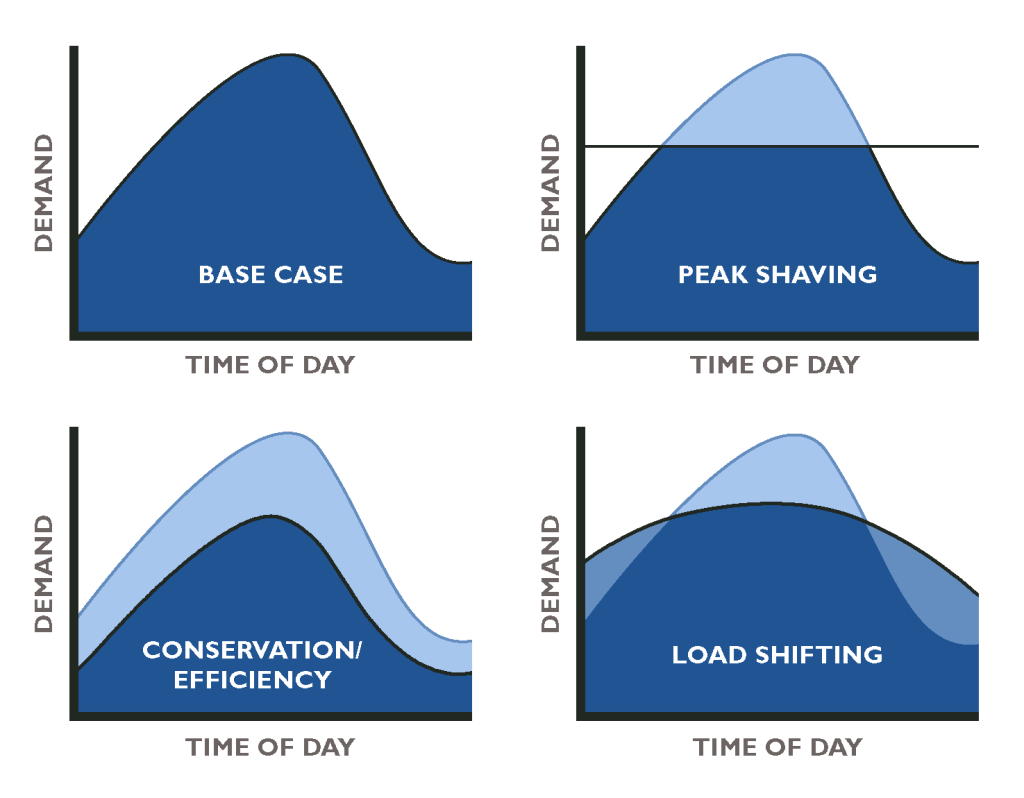
Credit: Powerwise
I believe we must heavily invest in demand response if we are serious about decarbonizing. The demand side of the equation is just as important as the supply side, and certain demands, or “loads,” have a surprising amount of flexibility. One of the best (albeit controversial) examples is Bitcoin mining. By taking the cost of wholesale power and the market price of bitcoin, miners can find the “break-even” point at which all of their operational costs – including the very significant cost of energy – are equal to the value of bitcoin they can produce. Because Bitcoin mining is not an essential service, Bitcoin companies that buy power at wholesale rates simply don’t operate when the price of power goes above a certain threshold. Though there is less flexibility, this same concept can be applied to other industrial loads, such as large data centers.
Most individual customers do not pay the “wholesale” rate of electricity in electricity markets; rather, they pay the rate specified by their local utility. An increasing number of utilities offer “time-of-use” rates where electricity costs are more expensive during peak hours but cheaper at night. The idea is to incentivize people to shift more of their usage off the peak hours… for example, running their dishwasher, heating their water tank, or charging their EV in the pre-dawn hours when everybody is sleeping. Portland General Electric had a great pilot program where they installed a switch on the water heater in your home, and this switch was remotely operated to heat the water during off-peak hours, with the customer getting a nice rebate on their electricity bill as a result.
In my view, there are two main questions and concerns with demand response. First, how much should we expose industrial, commercial, and residential loads to wholesale electric market prices? The wholesale market can be very volatile and provides the strongest price signal to encourage consumption at low-demand times, but it can also cause unexpected surcharges for customers during periods of severe weather. For example, ERCOT allows customers to opt into wholesale rates, and many of these customers received $1,000+ electric bills during Winter Storm Uri, when electricity prices stayed at price caps for several days due to supply shortages resulting from widespread, unplanned natural gas plant outages. We want to provide a price signal to encourage flattening the demand curve, but we want to avoid leaving customers with extreme bills during the times when electricity is needed the most.
Second, how much autonomy should the utility have in controlling different types of loads? For a utility to count demand response as a type of “capacity” they can utilize to reduce the load they are obligated to serve, they need to have full control over that resource. How would you feel about the utility only allowing you to heat your home to 65 degrees during a polar vortex, but giving you a nice chunk of change for your inconvenience? I think most of the utility control will be for industrial and commercial loads, but there already are some applications for residential loads (such as those hot water heaters) and there are opportunities for many more.
Ames should be in the upper 80s through Thursday with a few thunderstorms before cooling to the low/mid 80s Friday/Saturday and to the 70s next week. Autumn semester began today, so by that time, I’ll be fully immersed in my electrical engineering coursework! Stay cool out there my friends.