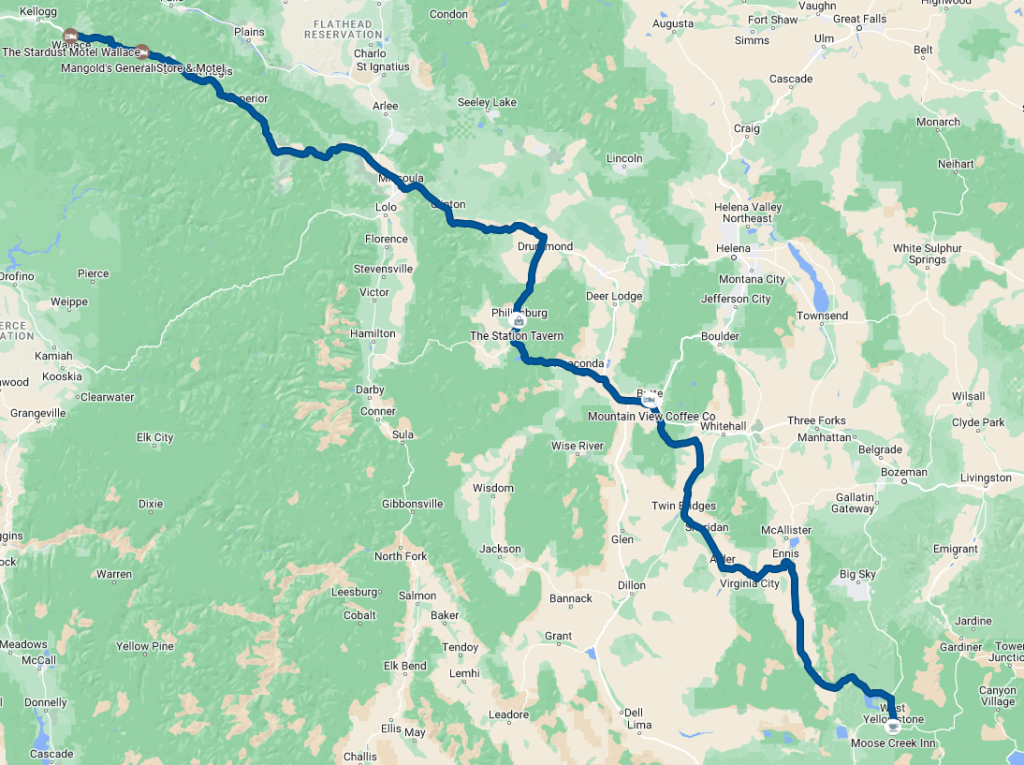
We began our second day in Wallace, Idaho and ended in West Yellowstone, MT. It was mainly a day of driving, but along the way, we stopped at a funky general store in Saltese, MT, had lunch in Philipsburg, MT, and stopped in Anaconda and Butte to see the Anaconda Smelter Stack and Berkeley Pit, respectively. We had stunning views throughout, especially as we moved beyond Big Sky towards West Yellowstone.
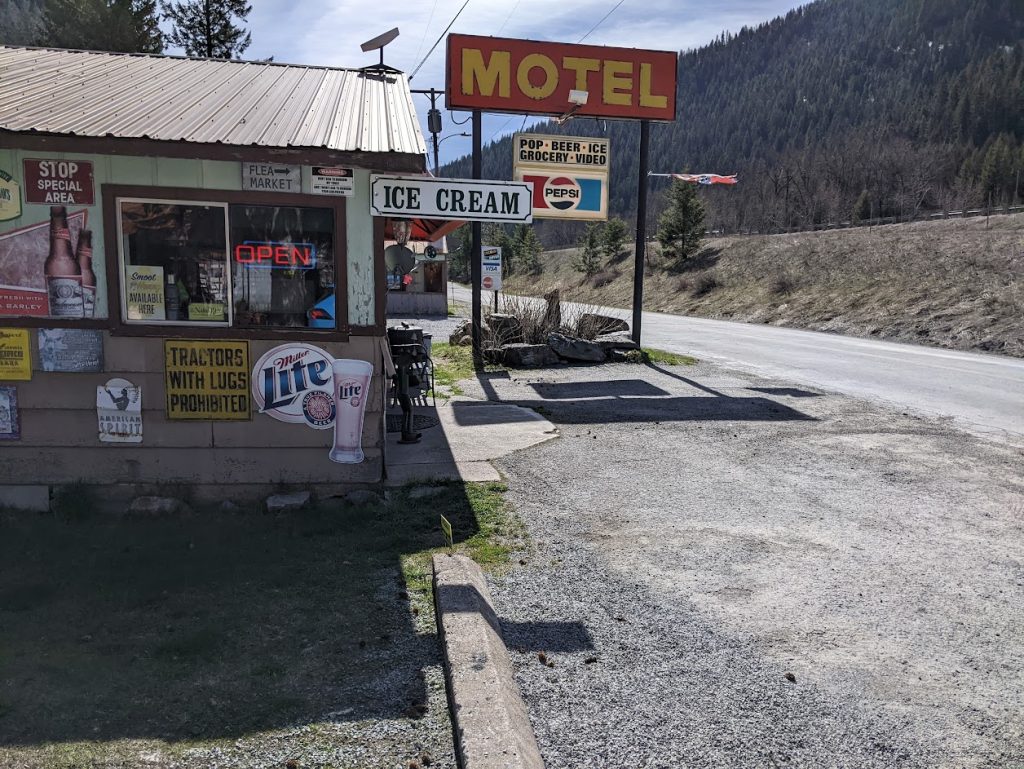
Saltese is an unincorporated community in far Western MT with a permanent population of only ten people. The main attraction in Saltese is Mangold’s General Store and Motel. My mother stayed here when she was going on a bike trip through Idaho and western MT and it was directly on our route, so we had to stop by. The general store had lots of funky signs and assorted snacks/souvenirs. We chatted with the manager there for a few minutes and then headed on our way.
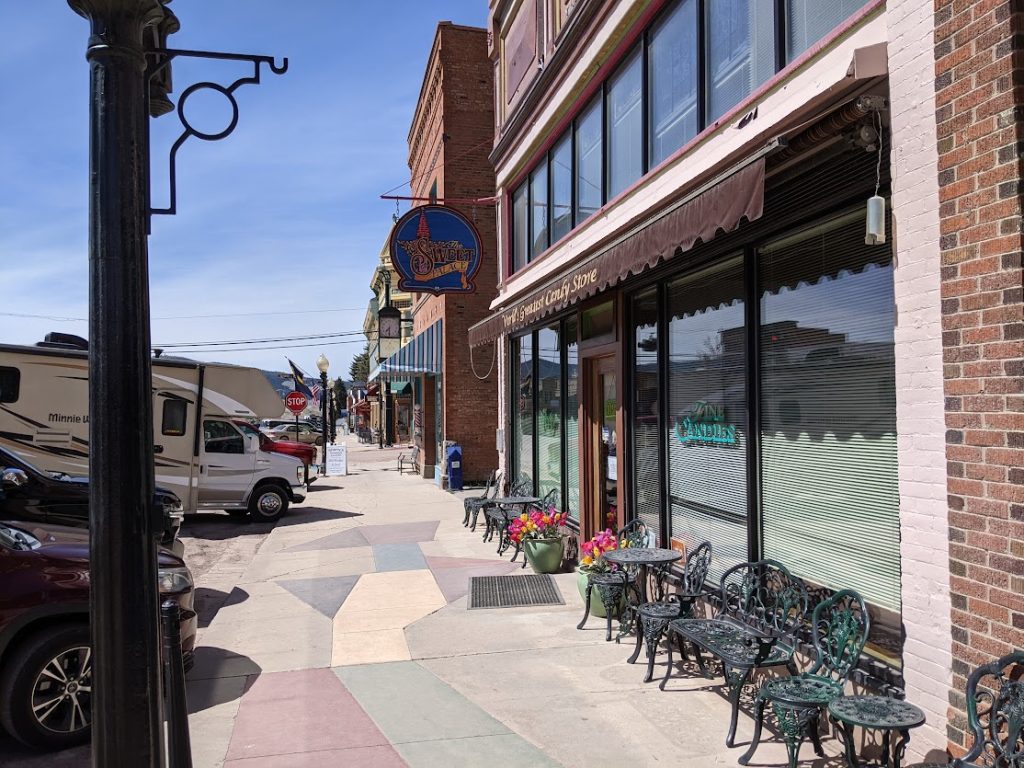
We continued on I-90 through Missoula and turned south on Highway 1 at Drummond. We stopped in Philipsburg to grab lunch and go to the Sweet Palace, which bills itself as the “grandest candy emporium in the American West.” They had tons of homemade fudge/taffy and other, branded candies.
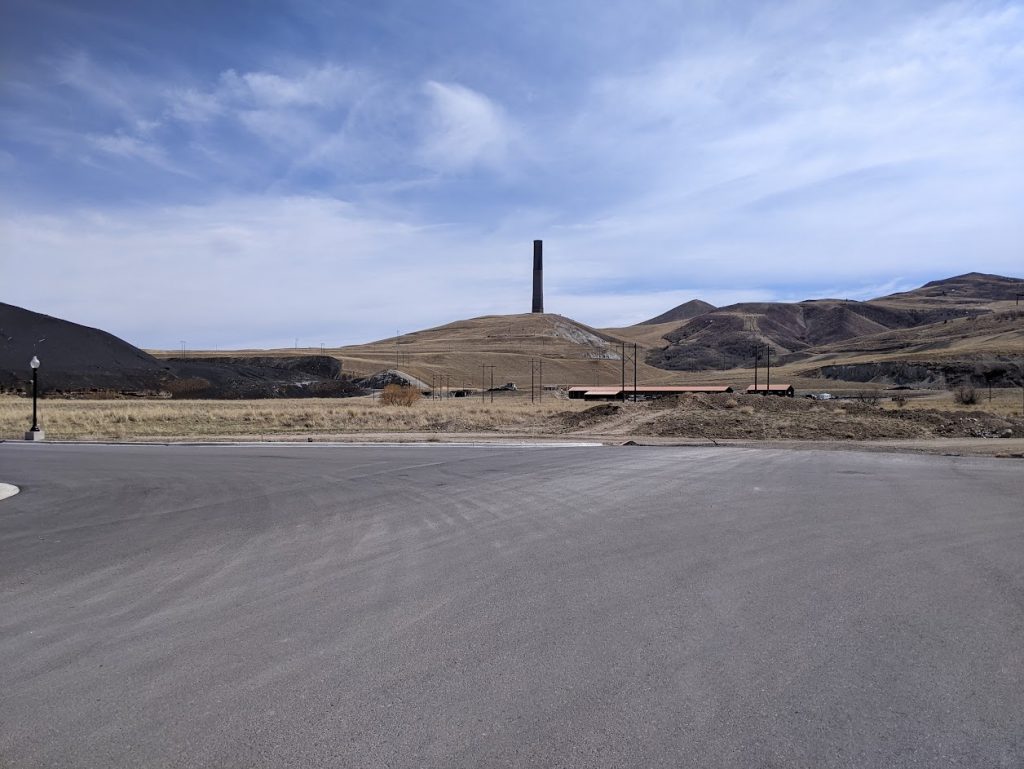
The Anaconda Smelter Stack is the tallest masonry structure in the world and is 585 feet tall. It was built in 1918 for the Anaconda Copper Mining Company and closed in 1981 after the Washoe Smelter closed. The stack itself is a chimney to expel the smoke created by smelting copper. Seeing the smelter stack was fascinating, but it was also sobering to see the copper tailings dotting the vicinity – a reminder of the environmental destruction inevitably created when mining, smelting, and refining the raw materials necessary for modern society to function.
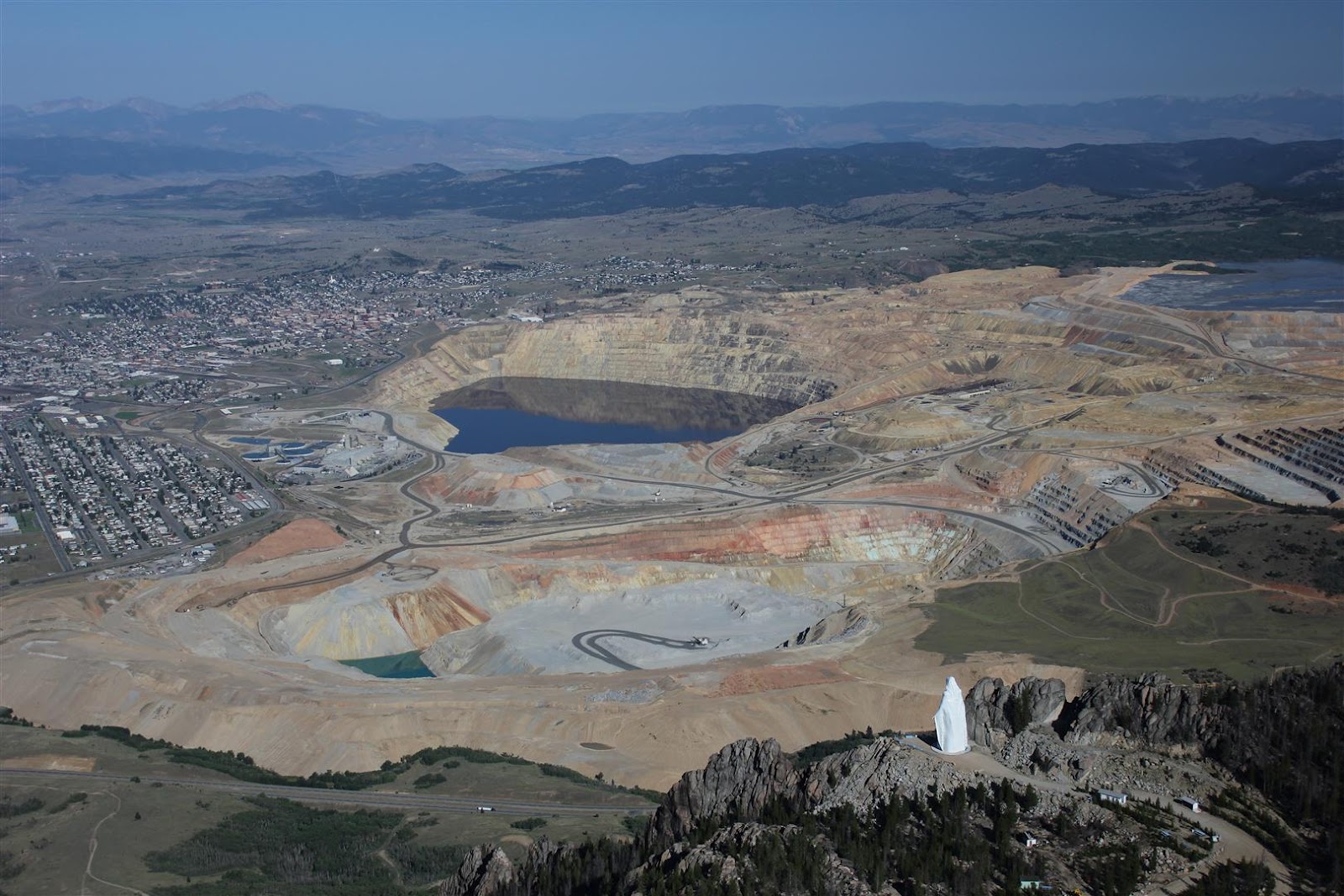
But if the smelting stack was sobering, it was nothing compared to the Berkeley Pit at Butte, Montana. The Berkeley Pit is a lake that has filled a decomissioned open pit copper mining and is extraordinarily toxic. It has an acidity of 2.5 pH (about the same as lemon juice or stomach acid). This acidity is created as rain/groundwater dissolves pyrite and other sulfide materials, creating sulfuric acid. This sulfuric acid then leaches through the exposed ore, leaching various heavy metals into the pit. There was a famous incident in 2017 when 3,000 – 4,000 snow geese died after landing in the pit due to sulfuric acid burns and poisoning from copper, cadmium, and arsenic. Employees at the pit now use firearms to scare birds away from flying into the pit. The Berkley pit is probably the only place in the world where birds are safer when they are under fire!
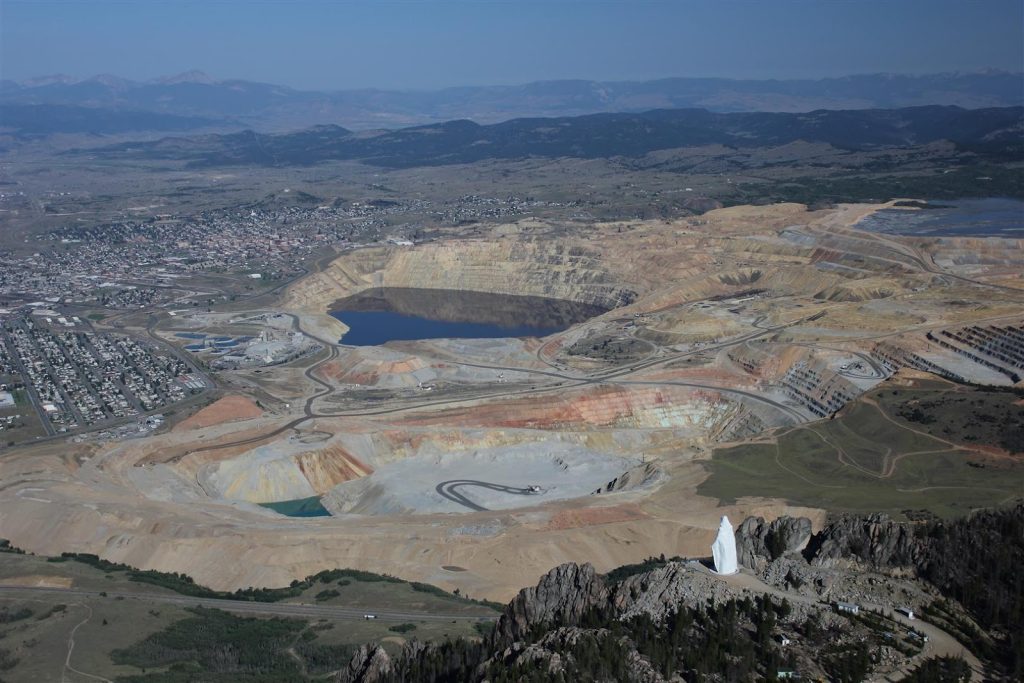
As the picture above shows, the pit is directly in the town of Butte. The water level in the pit is 150 feet below the groundwater table, and levels are closely monitored. Water is pumped to ensure that this water does not reach Butte’s groundwater table, but it is still a major concern for residents living in or around the Butte region.
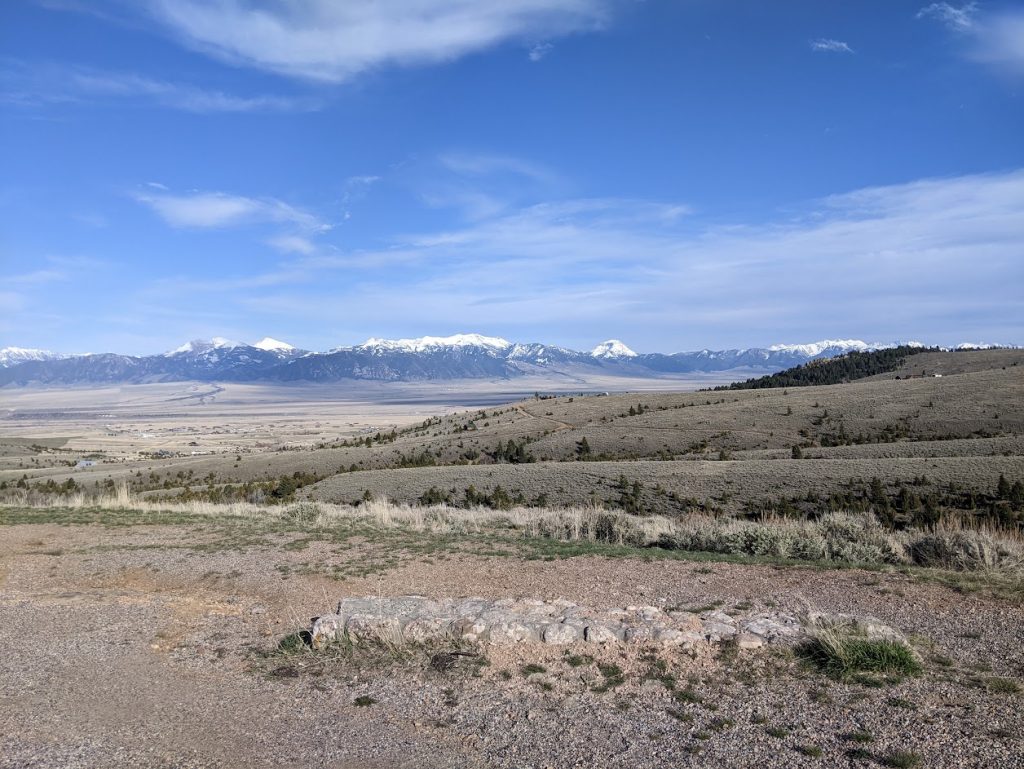
Thankfully, we were later treated to some incredibly beautiful terrain as we headed southeast on US-287 to West Yellowstone. We drove through multiple expansive valleys flanked by majestic peaks, with the most dramatic being the Madison Range south of Ennis, MT.
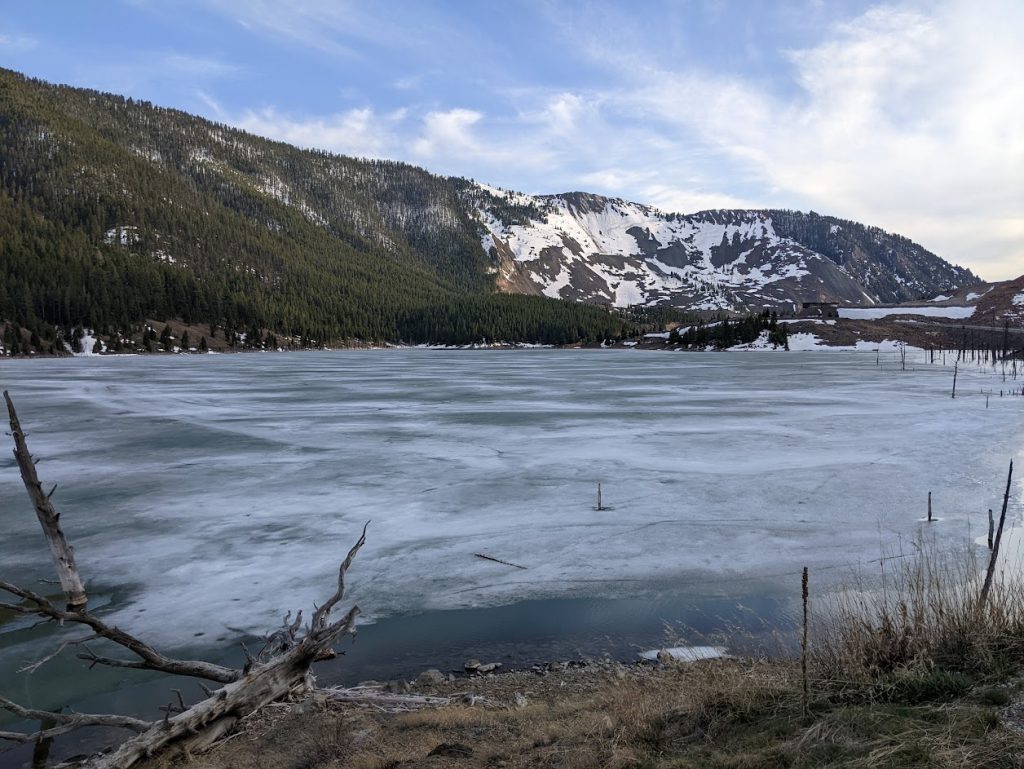
Towards the end of the day, we stopped at “Quake Lake,” which was created on August 17, 1959 after a 7.3 magnitude earthquake struck Yellowstone National Park and a massive landslide dammed the Madison River. You could see the evidence of the landslide and the dead, flooded trees in the lake. It was eerie imagining the entire mountain catastrophically collapsing during the earthquake and the Madison River slowly but surely filling up the resultant lake, flooding the virgin mountain forests below.
Tomorrow we will check out Yellowstone National Park. Yellowstone has something for everybody – geothermal features for the science nerds, majestic wildlife for the botanists, and extraordinary mountains, waterfalls, and a massive caldera from an ancient eruption approximately 625,000 years ago. Much of the park is still closed for the winter, but the most famous springs and geysers – including Old Faithful and the Grand Prismatic Spring – will be open.