I am currently driving across the country to begin a doctoral program at Iowa State University in power systems engineering. My research will be at the intersection between long-term infrastructure planning and meteorology. In particular, I’ll work on helping the grid become more resilient to extreme events.
It’s been a pretty quick turnaround for me – my last day of work at Avangrid Renewables was on the 12th and I moved out of Portland on the 20th. To pack my things, I used one of those “U-Box” pods and highly recommend it if planning a cross-country trip. I’ll move into my new apartment Ames, Iowa on the 1st and officially begin my employment as a research assistant in Iowa State’s Electrical and Computer Engineering Dept a few days later.
I’ll blog more about my research and other topics in power markets/engineering as I get settled in and begin work on some of those projects. But in the meantime, I’m driving my personal car across the country with my parents and am making some interesting stops along the way. Over the next few blogs, I’ll share some pictures and stories as I travel from the Pacific Northwest to the Plains.
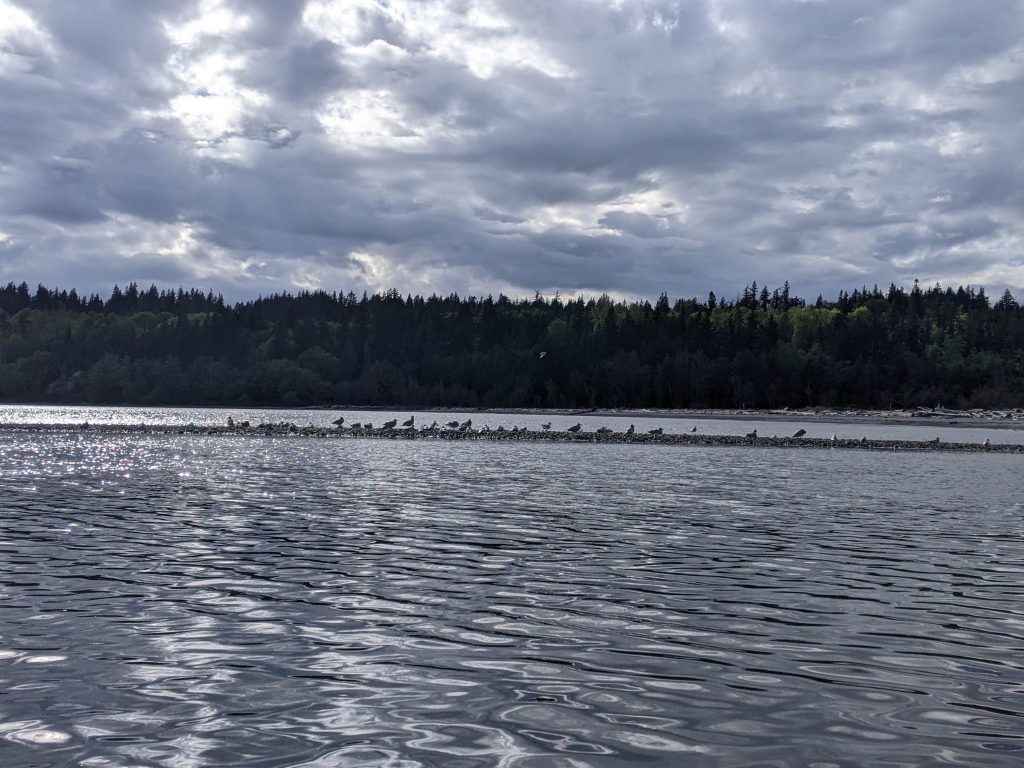
We started our trip from Whidbey Island on Monday, 4/22. I traveled up from Portland to Seattle and then Whidbey on Saturday 4/20 to see a few friends in Seattle before I left, and I spent all of Sunday 4/21 up at Whidbey. I went kayaking Sunday evening and savored the smell of the ocean and the marine life throughout Cultus Bay near South Whidbey Island. Iowa is about as far away from the ocean as you can get!
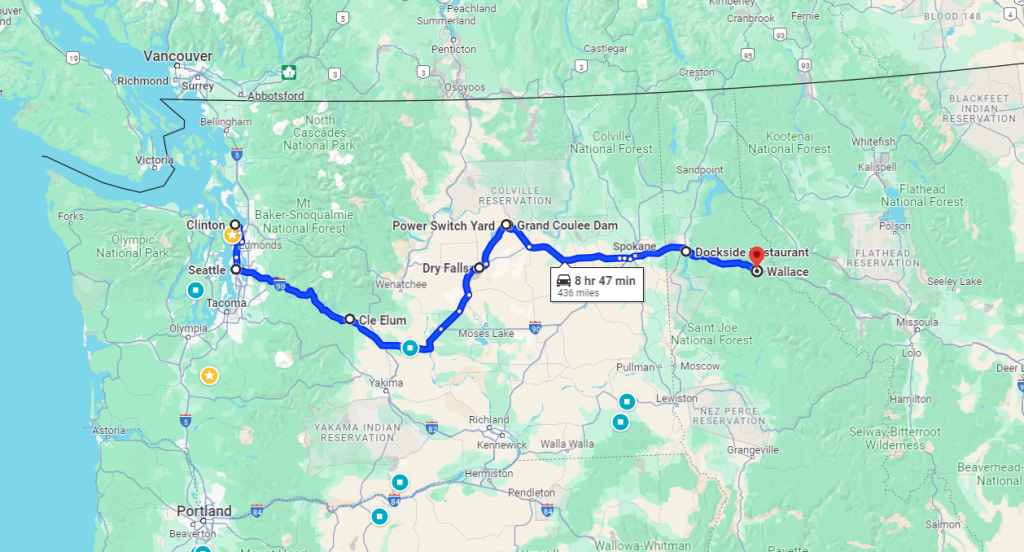
We took the South Whidbey Island ferry from Clinton to Mukilteo in the morning and then drove from Mukilteo to Seattle to pick up a few things before beginning our long trek east. We reserved a hotel in Wallace, Idaho to spend the night, but we took a slight detour through Eastern Washington to see Dry Falls and Grand Coulee Dam, which added approx. 2 hours to our trip.
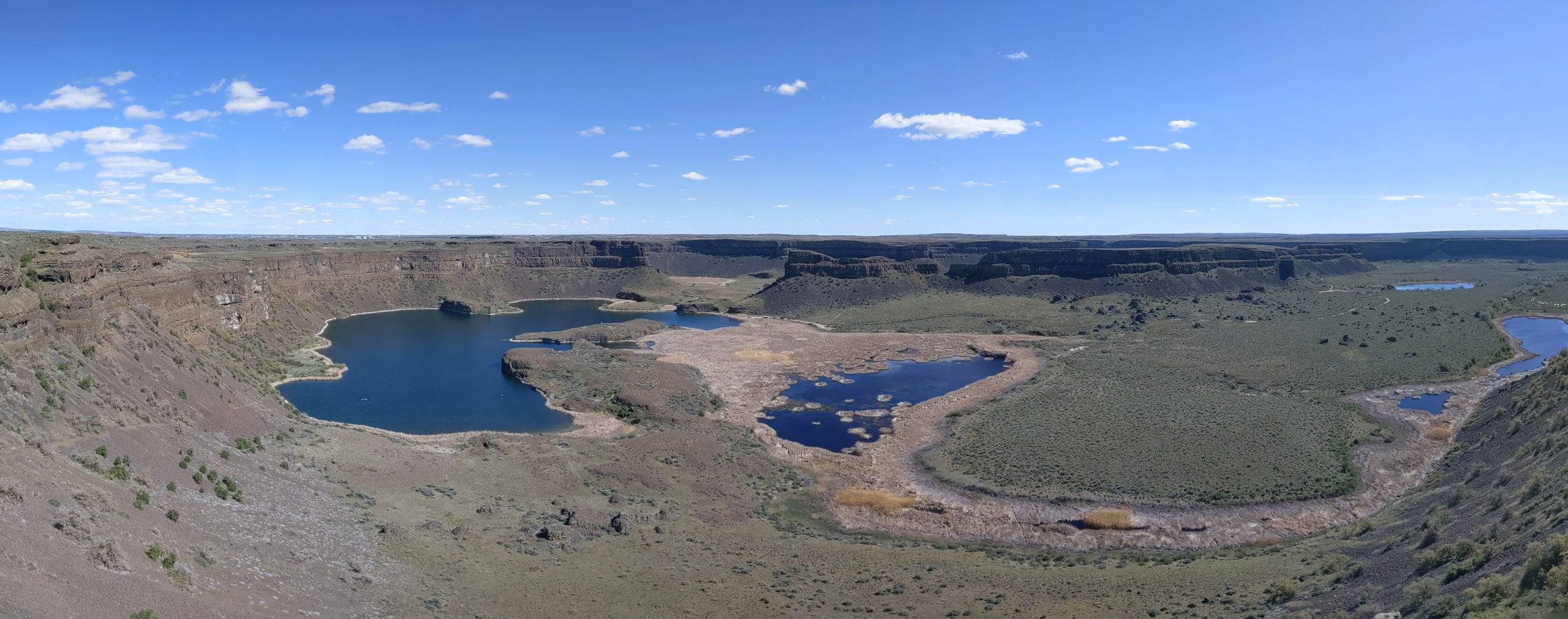
The last time I was at Dry Falls State Park was when I was in “Desert School,” which was a multi-day trip I took at Garfield High School with many other freshmen. I had learned about the “Channeled Scablands” and “Bretz Floods” over Eastern Washington when I was in middle school, but although I had traveled to Eastern Washington before, I had never seen Dry Falls, Grand Coulee, or any of the other channeled scablands. It was wonderful to revisit those spots and think about the immense floods over the Columbia Basin that created these features towards the end of the last ice age. Dry Falls is 3.5 miles wide, 450 feet tall, and, during the Bretz floods, had a maximum flow of ten times the flow of all current rivers in the world combined. The “lakes” below the cliffs are actually plunge pools created when these cataclysmic floods flowed over Dry Falls.
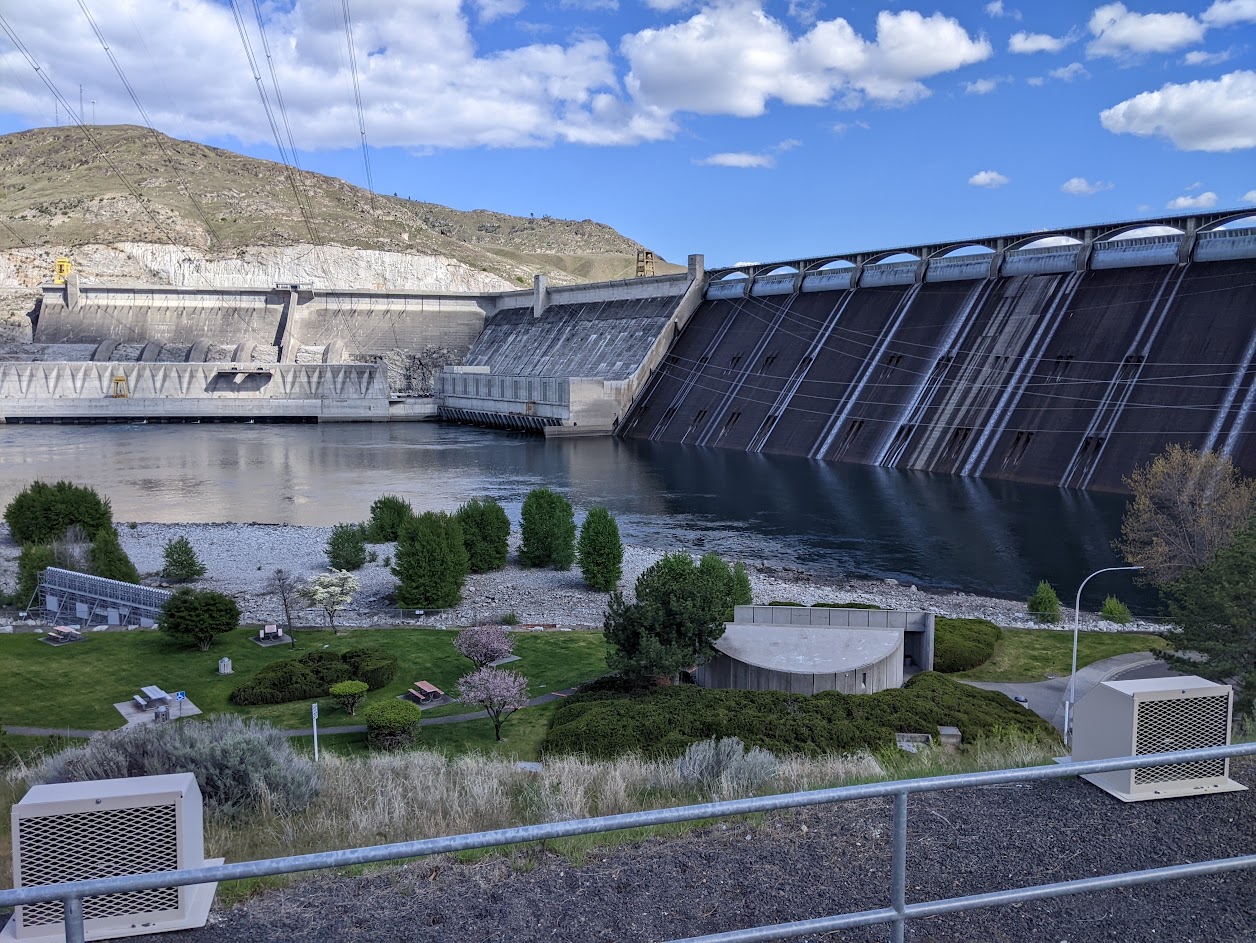
After Dry Falls, we drove up towards Grand Coulee Dam. Grand Coulee Dam is the largest power-generating facility in North America with a maximum capacity of 6,809 MW. However, it only has a capacity factor of 36% (though this varies from year to year based on snowpack), so it usually does not generate the most power annually. That distinction belongs to the Palo Verde nuclear plant in Arizona, which, on average, generates 50% more power per year than Grand Coulee.
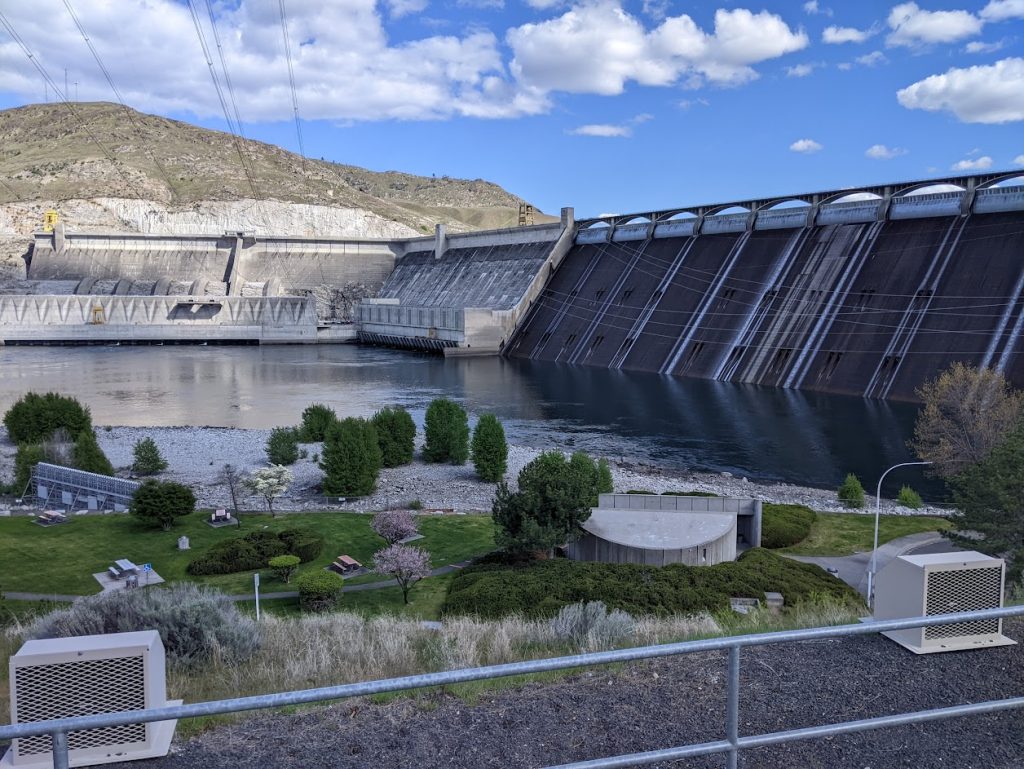
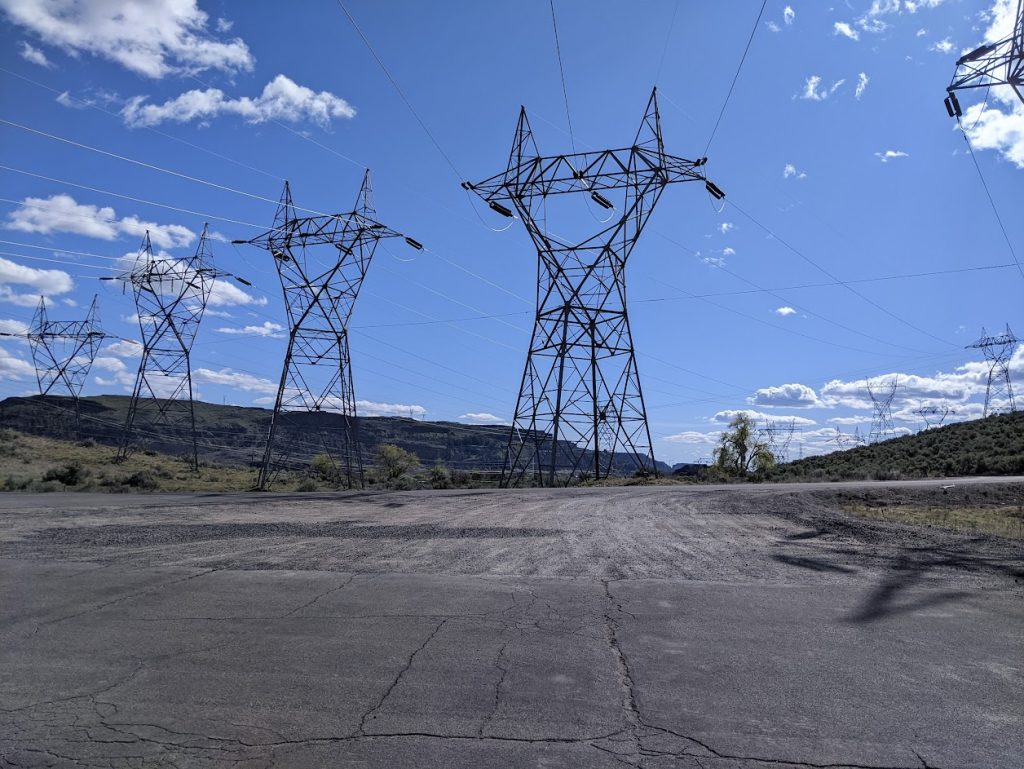
As a budding power systems engineer, I was interested in looking at the switchyard coming out of Grand Coulee and the massive three-phase AC transmission lines emanating from the plant. After visiting the dam, we took a quick stop at the Grand Coulee switchyard, where the power generated from the spinning turbines at Grand Coulee is “stepped up” to higher voltages (and, consequently, lower currents) to more efficiently transport power over long distances. Standing under the transmission towers, you could hear a faint, constant buzz due to the “corona effect,” which is where very high voltages cause the air surrounding the wire to ionize and cause the line to partially discharge. You could also hear a louder buzz from the switchyard itself where the transformers were stepping up voltages, as the transformers themselves vibrate due to the strong magnetic forces pushing through the iron laminations (i.e. layers) of the transformer.
After visiting Grand Coulee, we drove through Spokane and had a nice dinner at Dockside at Lake Couer d’Alene, and we finally made it to Wallace, Idaho around 9pm. We drove about 440 miles over the day. Tomorrow, we’ll drive to West Yellowstone and will visit Yellowstone National Park on Wednesday.