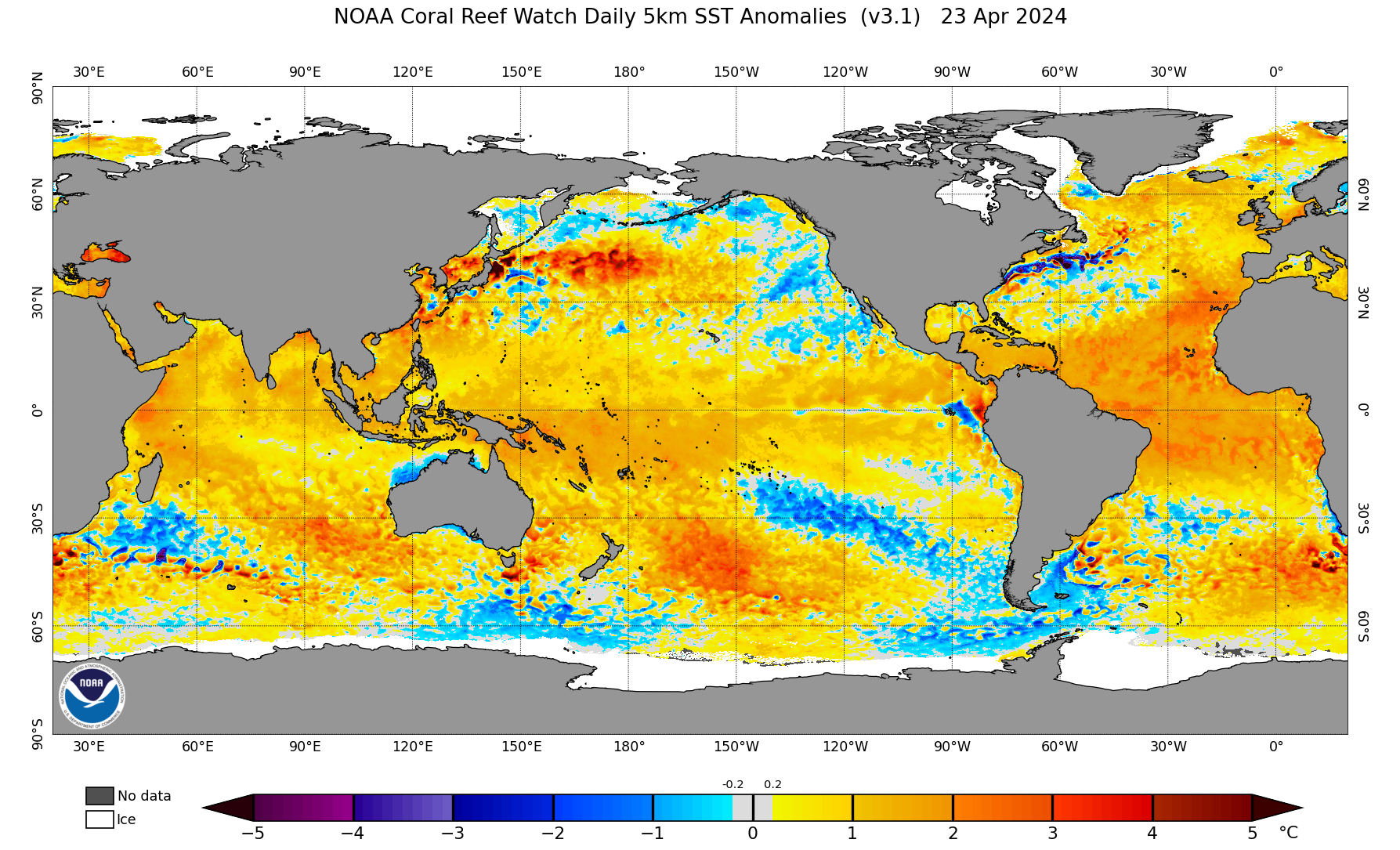
In May 2024, NOAA issued their official forecast for 2024 Atlantic hurricane season. NOAA administrator Rick Spinrad warned that the 2024 Atlantic Hurricane season was shaping up to be an “extraordinary one,” and the official forecast called for 17-25 named storms, 8-13 hurricanes, and 4-7 major (category 3+) hurricanes. This was the highest number of storms ever forecast for the Atlantic and well above the average of 14 named storms per year. NOAA cited record warmth ocean temperatures over the Atlantic, burgeoning La Nina conditions in the Pacific, and reduced Atlantic trade winds/wind shear as factors influencing their forecast.
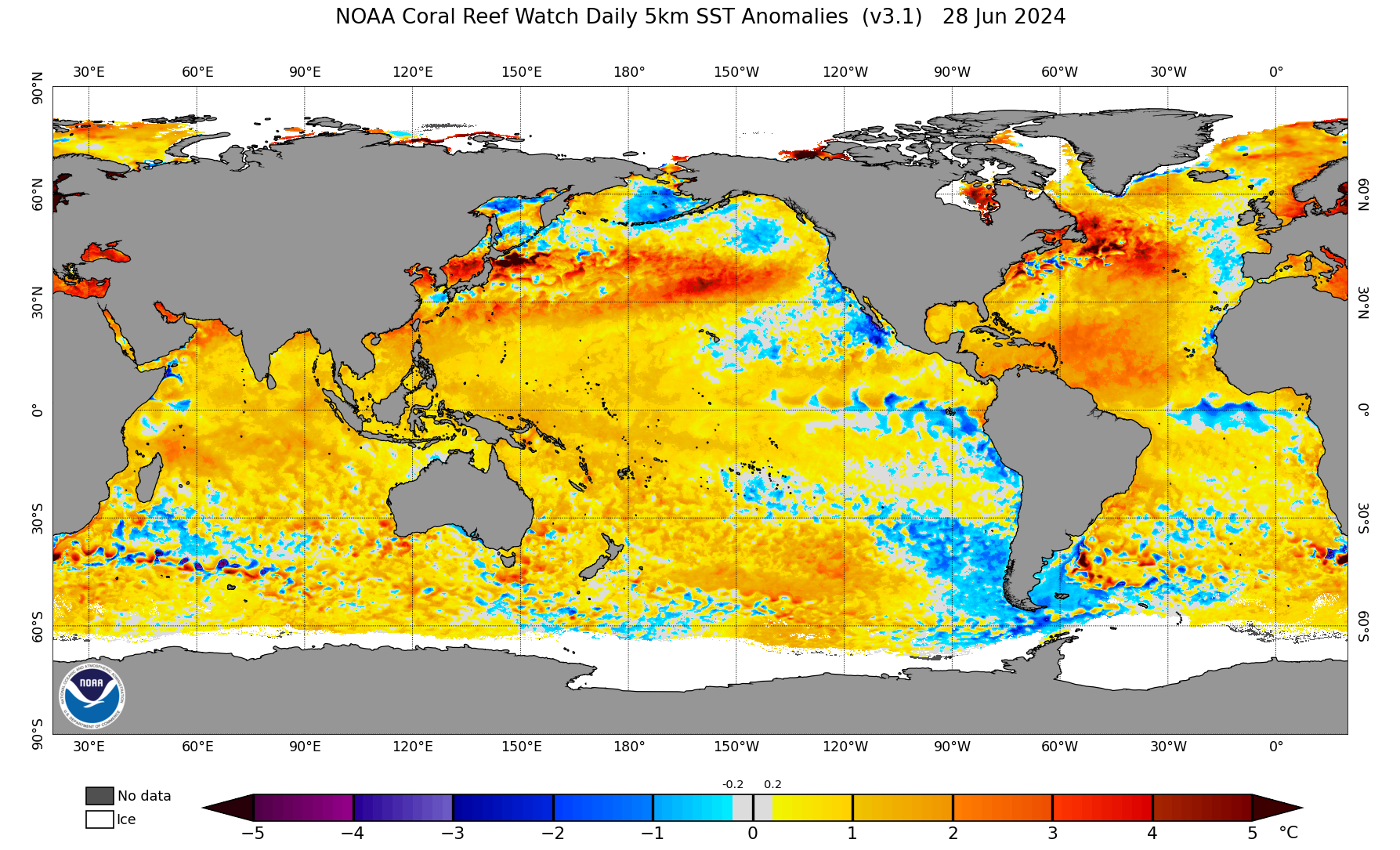
Credit: NOAA Coral Reef Watch
So far, this forecast is right on track. Hurricane Beryl – the second-named storm of the season, is now a category 4 hurricane. It is the first category 4 hurricane ever recorded in June and only the fourth category 4+ measured before August since records began in the mid-19th century. Additionally, it is the easternmost and fastest-intensifying hurricane June hurricane on record.
Only 3 Atlantic Basin Cat. 4+ #hurricanes before August in the database dating to the mid-19th century.
— Jonathan Erdman (@wxjerdman) June 30, 2024
If #Beryl does that, it would have done so one week earlier than 2005's Dennis. pic.twitter.com/5eKOQcWDh4
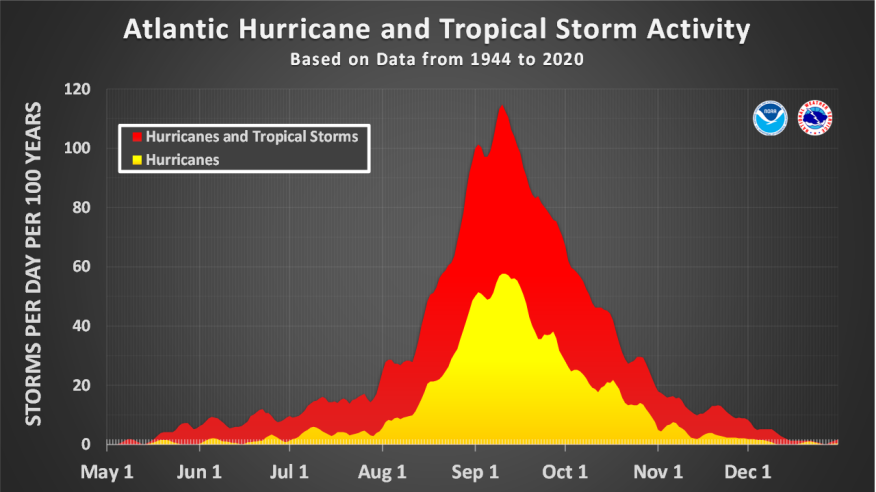
Atlantic Hurricane season usually doesn’t begin in earnest until August, peaks in September, and dies down by late October, but 2024 is off to a blistering start.
Beryl Current Conditions and Forecast
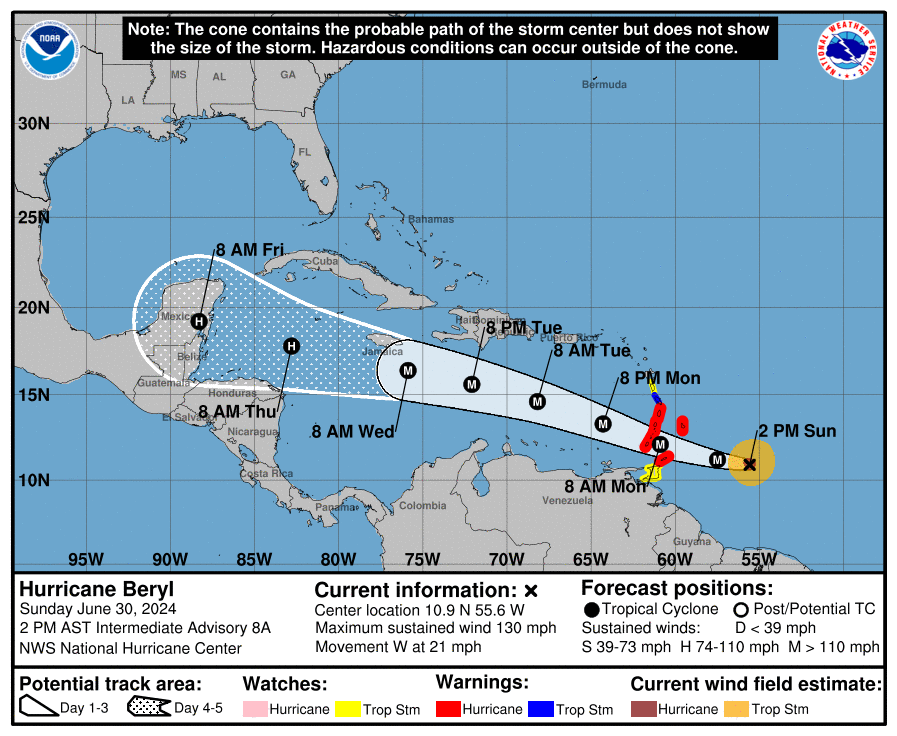
As of 13:00 Atlantic Standard Time (same as Eastern Time), Beryl was a Category 4 storm tracking west at approximately 20 mph. It is forecast to make landfall at the Leeward Islands early tomorrow morning as a major hurricane, bringing catastrophic wind, rain, and storm surge.
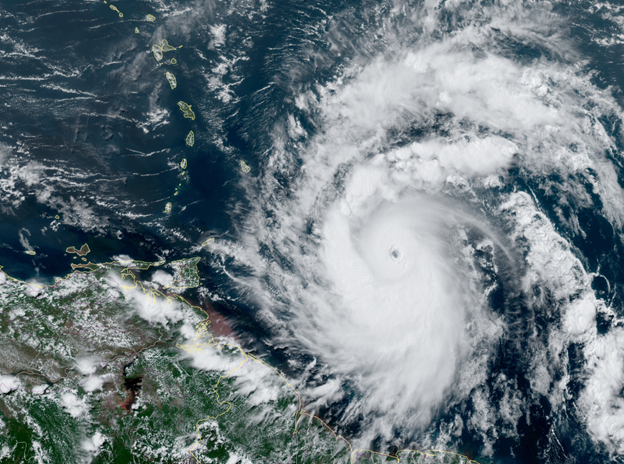
Credit: CIRA/RAMMB
After landfall, it is expected to maintain major hurricane strength as it tracks through the Caribbean, with potentially significant impacts to Jamaica expected by Wednesday. By Thursday night/Friday morning, it should approach the Yucatan Peninsula, though the exact path is still uncertain.
Hurricanes and Electric Grid Resiliency
One of the biggest topics in electric infrastructure planning is making the power system more resilient to extreme events. The Federal Energy Regulatory Commission (FERC) officially defined power system resilience as “the ability to withstand and reduce the magnitude and/or duration of disruptive events, which includes the capability to anticipate, absorb, adapt to, and/or rapidly recover from such events” in FERC order 162, issued in January 2018. Resilience is distinct from and more loosely defined than “reliability,” which refers to the ability of the electric grid to constantly provide a stable and secure flow of electricity and is accompanied by distinct “reliability standards” that can be legally enforced. That said, resiliency and reliability are closely related, particularly during extreme events, as a resilient grid is necessary to support reliable operation.
One of the best-known examples of poor electric grid resiliency was when Puerto Rico’s grid was devastated by Hurricane Maria on September 20, 2017. Maria hit Puerto Rico as a high-end category 4 hurricane with sustained winds of 145 mph, causing severe damage to transmission and distribution infrastructure and leaving nearly all of the island’s 3.4 million residents without electrical power.
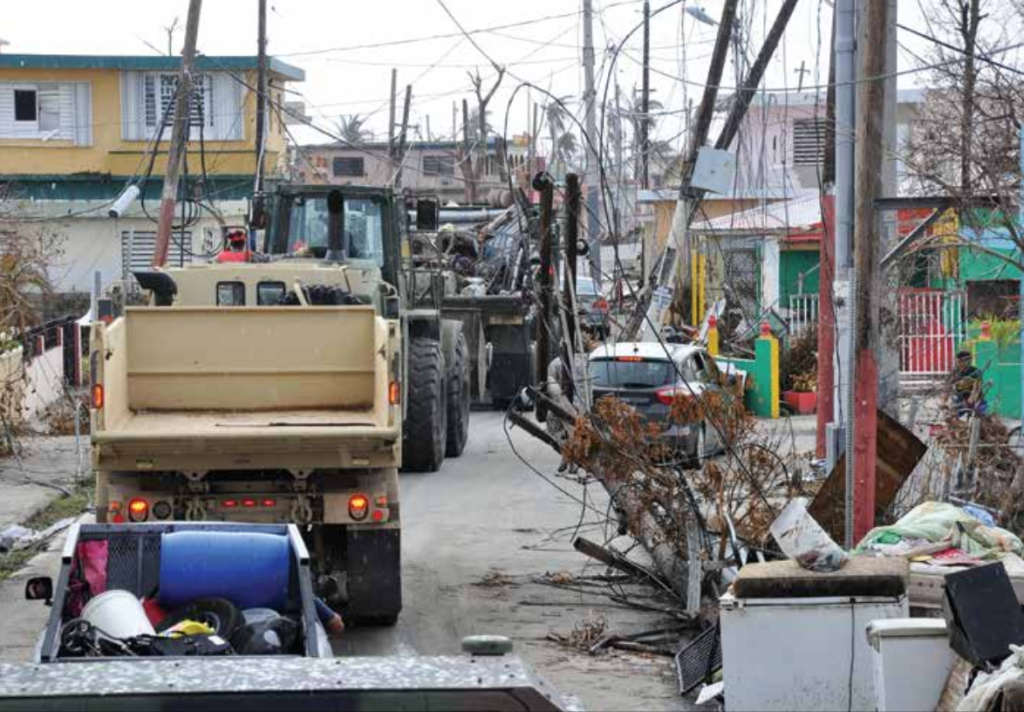
Retrieved from US Army Corps of Engineers Report: Getting the lights back on: The United States Army Corps of Engineers responds to Hurricane Maria, 2017-2018
The grid was so neglected and extensively damaged that only half of Puerto Rico’s residents were restored by the end of 2017. According to the Puerto Rico Electric Power Authority, power was finally restored in August 2018, though some customers allege they were without power even longer. It was the worst electrical blackout in U.S. history, far surpassing the Great Northeast Blackout of 2003. Even the Columbus Day Storm, which brought 116 mph gusts to Portland, 127 mph gusts to Corvallis, and knocked out power to 98% of customers within PGE’s service territory, only required two weeks to restore power to all customers.
Increasing the resiliency of the grid will become increasingly important as we head into a warming climate with more frequent and costly extreme weather events. A former electrical engineering graduate student from Iowa State, Cody Newlun, wrote a great paper on long-term planning approaches to increase the resiliency of the power grid to hurricanes, using Puerto Rico and Maria as a case study. Let’s hope Beryl and other tempests this season spare the most populated areas the greatest impacts and that we can continue this work towards increasing the resiliency of civil infrastructure to tropical cyclones.